





Introduction: A photography route around Pompeii and Vesuvius summits (from Naples)
Less than an hour’s drive from Naples unfolds a photographer’s dream: the ancient city of Pompeii, frozen under ash since the eruption of 79 AD, and Mount Vesuvius, the still-imposing volcano whose great cone dominates the bay. This photo itinerary walks you through the whole experience, from approaching Naples to the volcanic ridges, with exact addresses, ticket prices, opening hours, practical tips and immersive shooting angles to help you create powerful, story-driven images.
Naples is a city of contrasts: noisy streets, colourful façades, steep views over the sea and Vesuvius on the horizon; it’s the perfect jumping-off point to get an early start for Pompeii and then climb the trails up to the Grand Cone. This route is designed for both hobbyists and professionals eager to get the best from local light — sunrise over the bay, soft golden mornings in the ruins, twilight over the Tyrrhenian Sea, and panoramic views from the crater rim. It combines technical scouting, practical addresses (museums, welcome points), detailed prices in euros, and opening hours so you can plan your sessions precisely.
You’ll find framing suggestions here: how to use ruined lines to lead the eye, how to capture plaster casts of human shadows, where to position yourself for a full panorama of the Gulf of Naples from the Scala Santa trail or the Gran Cono viewpoint, and which gear to prioritise (lenses, filters, drone when permitted). I also cover logistics: transport from Naples (Circumvesuviana and buses), parking, on-site services, and recommendations for weather and safety. Finally, I share tips for processing your images (light post-processing, rebalancing highlights and managing depth of field) so you retain the historical and geological atmosphere of these places.
Whether you’re after tight shots of polychrome mosaics and frescoes, portraits of silhouettes in Roman streets, or wide-angle images showing the contrast between volcanic vegetation and the sea, this exhaustive itinerary will help you prepare your shoot like a pro. The practical details (full site names, exact addresses, prices in euros, opening hours) let you double-check arrangements before you leave — remember that hours can change with the season and on public holidays, so always allow some flexibility. I also include suggestions to optimise your schedule according to daylight and your photographic style, whether documentary, landscape or environmental portraiture.
Parco Archeologico di Pompei — Explore and photograph the ancient city
The must-see site is the Parco Archeologico di Pompei (official name) located at Via Villa dei Misteri, 2, 80045 Pompei NA, Italy. The main entrance is at Piazza Esedra (Porta Marina) and there’s a large secondary entrance at Piazza Anfiteatro. Opening hours: generally open daily from 09:00 to 19:30 (last admission 17:30) from April to October; in the low season (November–March) hours are often 09:00–17:00 (last admission 15:30). Indicative prices: full ticket around €16, reduced ticket (EU students 18–25) €2, free for under-18s; some special days may offer local or national free admission. Always check the official Parco Archeologico di Pompei website before your visit for temporary closures or changes.
Practical addresses inside and nearby:
– Biglietteria principale / Ticket Office (Porta Marina): Via Marina, access from Piazza Esedra, 80045 Pompei NA.
– Antiquarium of Pompeii (in-situ museum): Via Villa dei Misteri, 80045 Pompei NA — access from within the park.
– Main parking: Parcheggio Porta Marina, adjacent to the main entrance (coordinates and details on the welcome signage).
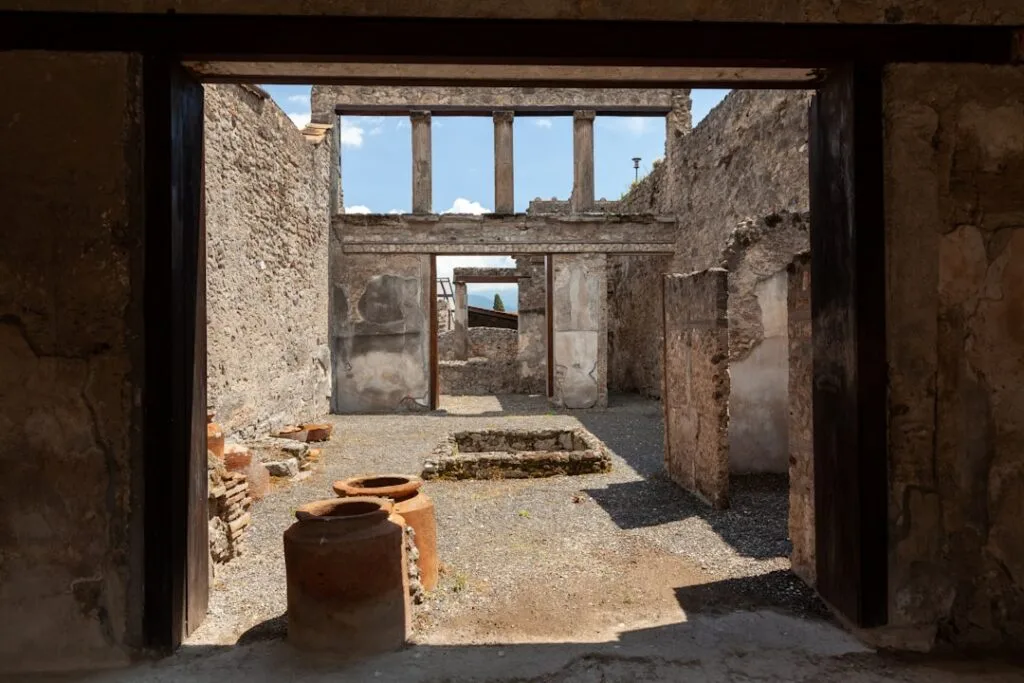
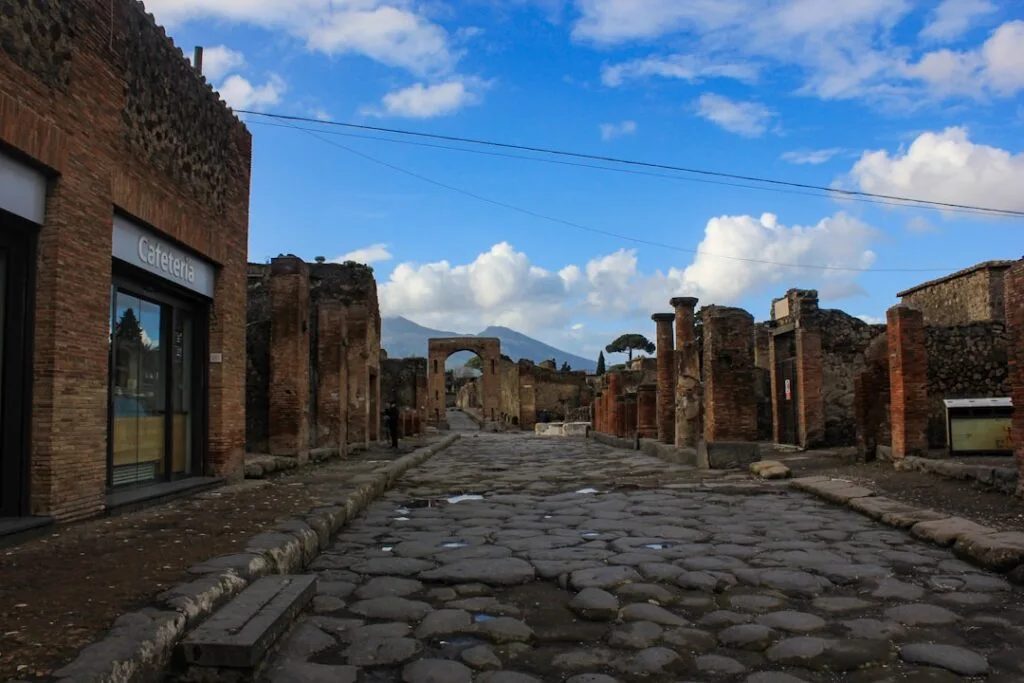
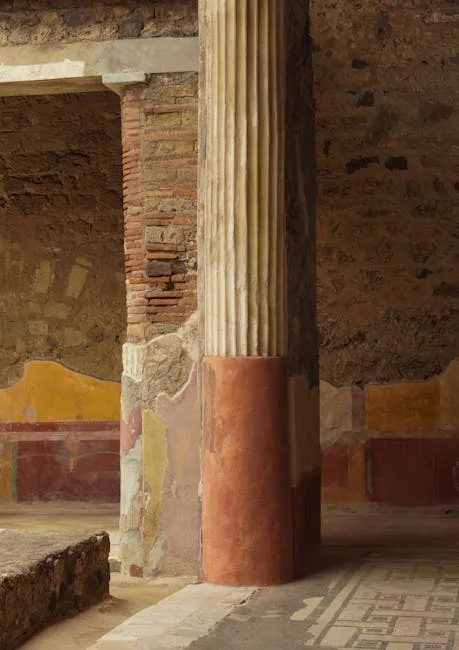
Immersive description: Pompeii offers a wealth of subjects, from Roman urban planning to private homes such as Casa del Fauno (House of the Faun, Via del Foro, 80045 Pompei NA) and Casa dei Vettii (House of the Vettii, Regio VI), right through to the amphitheatre (Anfiteatro di Pompei, Piazza Anfiteatro). Every paved street becomes a natural leading line to guide the viewer’s eye; shop walls with their painted signs and graffiti provide textures and layers of colour. The plaster casts of victims displayed street by street are powerful subjects: manage contrast carefully and favour prime lenses (35mm, 50mm, 85mm for emotional details) to capture the relationship between the individual and the archaeological space.
Photo and practical tips:
– Best times: sunrise (low grazing light on the ruins) or late afternoon for long shadows and warm light.
– Recommended gear: 24–70mm for versatile landscape/architecture, 70–200mm for details and compression, a lightweight tripod for low ISO in shaded areas and discreet HDR work.
– Drone rules: the archaeological park generally prohibits drone use; check with the Parco Archeologico di Pompei for special permissions.
– Access and comfort: wear comfortable shoes and bring a water bottle — paths can be rocky. Toilets and water points are located near entrances and at the Antiquarium.
Ascent and panoramas: trails, viewpoints and access to Vesuvius’ Gran Cono
Vesuvius National Park (Parco Nazionale del Vesuvio) covers several municipalities around the volcano. To reach the main trail leading to the summit and crater (Gran Cono), two approaches are most commonly used by visitors from Naples: the SP2/SR 268 road via Ercolano/Torre del Greco (south side) and the route via Trecase/Boscotrecase (east side). A well-known visitor point and parking area is the Visitor Centre often referred to as the « Casa del Tartufolo / Punto informativo, » commonly listed as a Vesuvius National Park info point. A useful address (for tourist info and some recognised guide agencies) is Parco Nazionale del Vesuvio – Centro Visite, Via Plinio 4, 80056 Ercolano (NA). Park hours: the park is accessible every day, but access to the ascent trail to the Gran Cono may follow specific opening times (generally open 09:00–18:00 in summer, with reduced hours in winter). Trail access fee (approx.): €10–€15 for the marked path leading to the crater (guide fee may be included depending on the departure point); many local operators also offer shuttles or guided hikes for €20–€40 depending on service and duration.
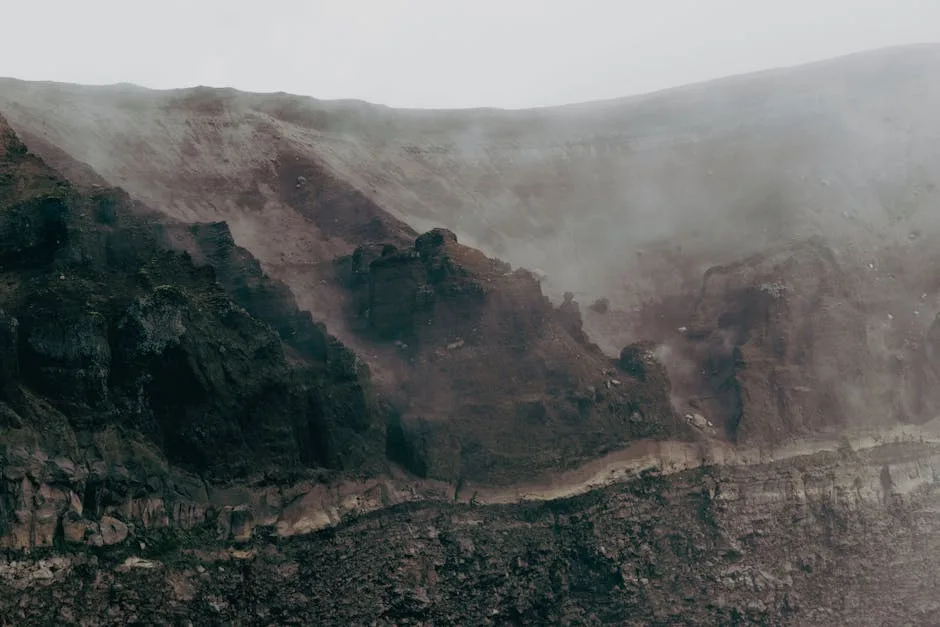
Immersive description: the climb to the crater rim crosses old lava fields, with scrubby vegetation and progressively unveiling panoramas. The southern slopes offer spectacular views over the Bay of Naples, the island of Capri and the Sorrentine coast. At the Gran Cono, the wide, deep crater shows ochre and blue-grey hues, intermittent steam and mineral textures perfect for geological close-ups. The contrast between the buried city of Pompeii below and the volcano’s raw power is a strong photographic theme: alternate wide shots with textured detail frames.
Practical tips:
– Hours and weather: hike early to avoid mist and summer heat. Wind can be strong at the summit — bring a windbreaker and protect your gear.
– Safety: follow signs, stay on marked trails and respect barriers. If you notice strong gas emissions, step back and notify park staff.
– Transport from Naples: Circumvesuviana to Ercolano Scavi (Via I Traversa), then EAV bus or taxi to the trailhead; by car, take the A3 motorway towards Salerno, exit Torre del Greco/Ercolano, then follow SP2/SR 268 towards Vesuvius.
– Photography: use a wide-angle for panoramas (16–35mm), a telephoto to isolate smoke and crater details (100–400mm), and a polariser to deepen sea and sky saturation. A tripod helps for HDR panoramas at sunrise or sunset.
Day-by-day photography route from Naples — optimise light, subjects and logistics
Here’s a detailed two-day itinerary designed to maximise your photographic output while minimising travel and taking site opening times into account. Departures assumed from Naples (Piazza Garibaldi or Molo Beverello depending on your accommodation). I include exact addresses for useful stops, indicative prices and opening times.
Day 1 — Pompeii and surroundings:
– Departure from Naples: Circumvesuviana from Napoli Garibaldi (Stazione Napoli Centrale, Piazza Garibaldi, 80143 Napoli NA). Train to Pompei Scavi – Villa dei Misteri (line to Sorrento). Approximate duration: 30–40 minutes. Circumvesuviana ticket roughly €2.50.
– Arrival at Pompei Scavi: follow exits to the Villa dei Misteri entrance (Via Villa dei Misteri, 2, 80045 Pompei NA). Arriving at opening time (09:00) reduces crowds and favours morning light.
– Morning: visit the Forum, Casa del Fauno (House of the Faun), and the Lupanare (brothel) to capture textures and shadow scenes. Tickets and hours: see Parco Archeologico di Pompei (full ticket €16, open 09:00–19:30 in high season).
– Midday: lunch and break at Ristorante Caupona (Roman-themed modern dining, Via Villa dei Misteri, 3, 80045 Pompei NA) — tourist menus from around €18–€25. Book ahead at weekends.
– Afternoon: Antiquarium (Via Villa dei Misteri) for mosaic and restored object details; late afternoon for grazing light on the Street of the Baths and around the Amphitheatre (Piazza Anfiteatro).
Day 2 — Vesuvius and viewpoints:
– Early departure: head to Vesuvius (by car ~30–40 minutes from Pompeii depending on traffic), or take the EAV bus from Ercolano Circumvesuviana station to the trailhead. Useful address for information and departure of excursions: Parco Nazionale del Vesuvio – Centro Visite, Via Plinio 4, 80056 Ercolano (NA).
– Morning: climb the marked trail toward the Gran Cono. Recommended start time: 08:30–09:00. Trail fee: around €10–€15 depending on access point and whether a guide is included.
– Lunch break: picnic areas or small restaurants on the park’s edge; a commonly cited choice is Ristorante La Terrazza del Re (Via Panoramica del Vesuvius, 27, 80040 Trecase NA) — dishes from about €12. Check opening times.
– Afternoon: photograph the crater from the rim, then descend to capture views of the Gulf of Naples at sunset from viewpoints near Torre del Greco/Trecase.
Final logistical tips:
– Power and batteries: bring spare batteries and memory cards; there are no reliable charging points on the Vesuvius trail.
– Insurance and gear: travel insurance covering photo equipment is recommended; protect lenses from volcanic dust with covers.
– Heritage respect: at Pompeii, climbing on archaeological structures is forbidden; follow park rules to help preserve the site.
Local practical advice, administrative notes and post-processing tips to enhance your images
Taking a comprehensive approach means preparing administratively, knowing local services and applying post-processing techniques tailored to archaeological and volcanic subjects. Here are concrete practical details and tricks to get the most from your photo stay.
Useful local information:
– Getting to Naples: Napoli-Capodichino Airport (Aeroporto Internazionale di Napoli – Capodichino, Via Nuova Poggioreale, 2, 80143 Napoli NA). Alibus shuttle (around €5) to Piazza Garibaldi.
– Local transport: Circumvesuviana (local rail network) is the most economical way to reach Pompeii and Ercolano; tickets sold at counters or machines for about €2.50 each trip. EAV and SITA buses serve Vesuvius access points from Ercolano, Torre del Greco and Pompei.
– Recommended accommodation: in Naples, consider Chiaia or near the Lungomare for bay views; in Pompeii, hotels near Via Roma allow an early start to the site (prices vary by season, roughly €60–€150/night for a 3–4 star hotel).
Administrative points and permits:
– Drones: not permitted in most protected areas without a permit. Contact the Soprintendenza Archeologica di Pompei (local office) and Parco Nazionale del Vesuvio for specific requests.
– Official guides: for in-depth info or restricted-access arrangements, book a guide accredited by the Soprintendenza (prices vary, typically from €80 for a half day for a private guide).
– Payments and security: most sites accept card payments, but always carry cash for taxis, small shops and local bus fares.
Post-processing techniques:
– Preserving atmosphere: for Pompeii images, manage highlights (sky) and shadows to preserve stone and fresco textures. A modest clarity boost and noise reduction in shadow areas can bring out material detail without overprocessing.
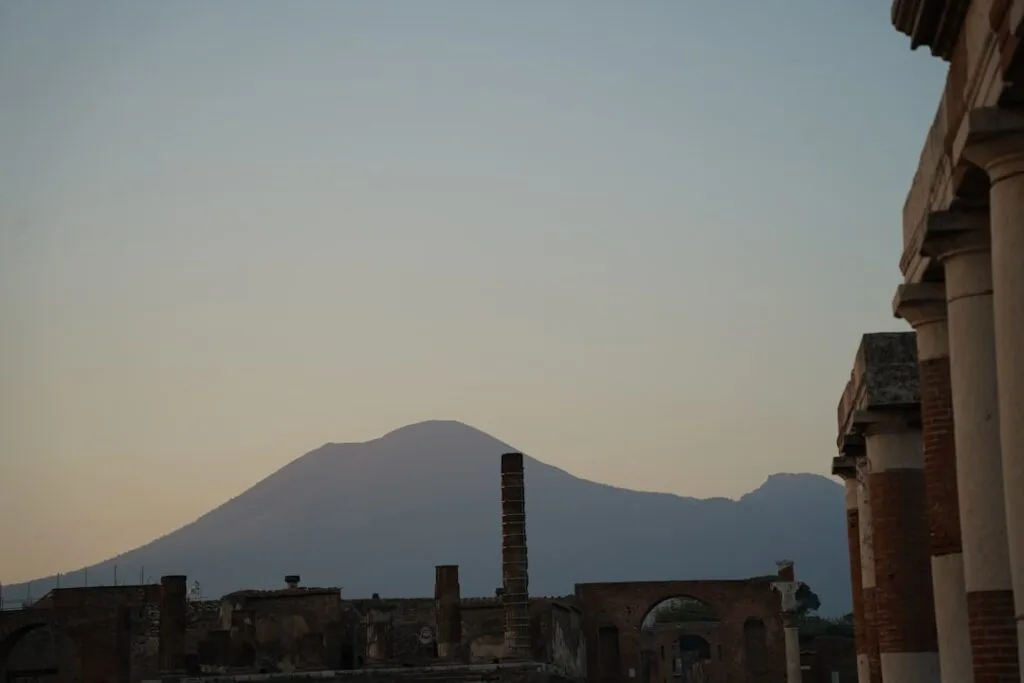
– Volcanic colours: Vesuvius shots often benefit from treatments that reinforce ochres, browns and the cool contrasts of the sky. Tweak white balance and tone curves to emphasise separation between mineral ground and sky.
– Panoramas and HDR stitching: on Vesuvius summit or in Pompeii Forum, use bracketing to capture full dynamic range and stitch exposures in post for sharp, detailed panoramas.
– Ethical conservation: for publication or sale of images including people or artefacts, respect image rights and site rules; crediting the Parco Archeologico di Pompei and Parco Nazionale del Vesuvio is appreciated.
Conclusion: Capturing the spirit of the place — beyond the images
This photographic journey between Pompeii and the summits of Vesuvius blends history, geology and Mediterranean light. Pompeii invites a temporal reading: every stone and plaster cast tells of a life interrupted, and the photographer becomes the narrator of those layers. Vesuvius brings geological presence — a reminder of natural forces still very much alive. Together they offer a compelling visual and emotional contrast. The details provided — full addresses such as Parco Archeologico di Pompei, Via Villa dei Misteri, 2, 80045 Pompei NA; Parco Nazionale del Vesuvio – Centro Visite, Via Plinio 4, 80056 Ercolano (NA) — plus price and opening time indications let you plan precise, respectful shoots.
Beyond technique, the success of a photo series comes down to observation and respect: waiting for the right light, talking with guides and wardens, settling in a lane to capture life passing through the ruins, or allowing the patience to climb Vesuvius at the pace of the clouds. Consider creating themed series — “traces of life in Pompeii,” “Vesuvius’ volcanic textures,” “gulf panoramas” — to tell coherent stories that will interest galleries, publishers or your personal travel book.
Finally, remember the experience isn’t purely visual: wind, scents of pine and salt, volcanic dust and the acoustic impressions of ancient streets all feed into the images you’ll produce. Prepare your gear, anticipate permissions (drones and guides), respect park and archaeological rules, and take the time to shoot from multiple angles — tight, contextual and panoramic — to capture the full richness of this territory. Safe photographic travels, and may your images pay tribute to both Pompeii’s millennia of history and Vesuvius’ geological power.