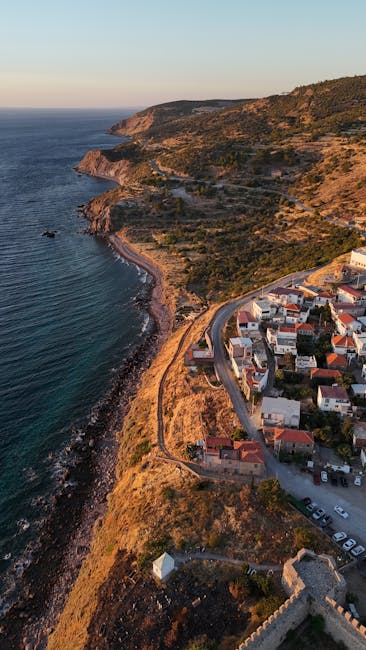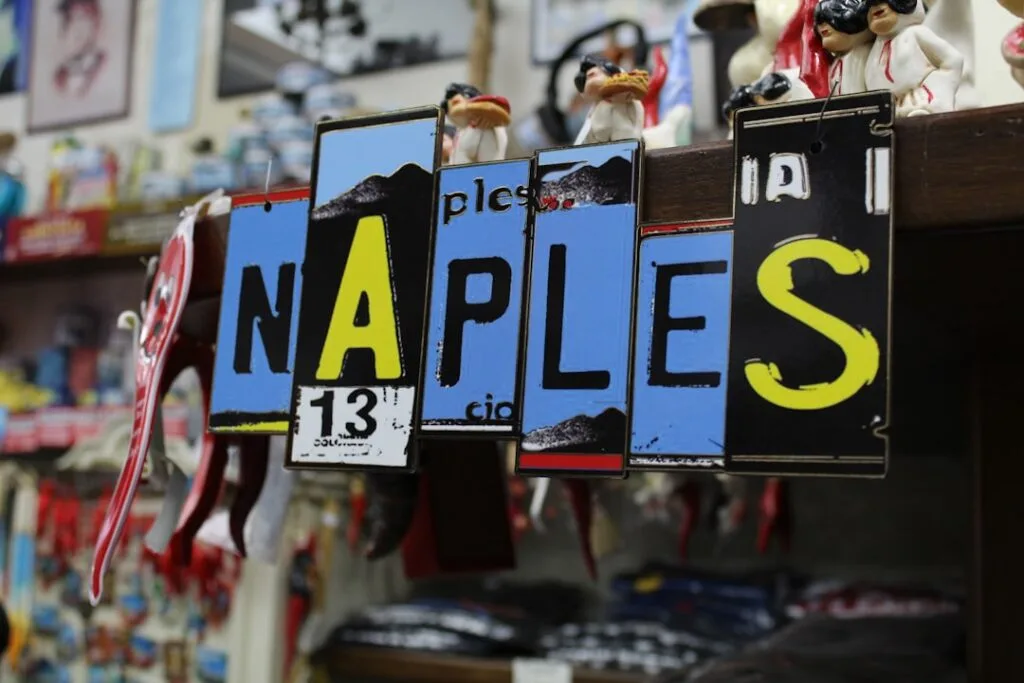






Introduction — Why Capri is a Photographer’s Paradise (context: Naples)
Capri is one of those islands that, just a short ferry ride from Naples, instantly turns everyday life into a visual feast of white cliffs, turquoise waters and that almost-magical Mediterranean light. For photographers — hobbyists and pros alike — Capri packs a wealth of motifs: iconic rock formations, colorful alleyways, historic villas, landscaped gardens and breathtaking sea views. Located in the Bay of Naples opposite the Sorrento Peninsula, Capri is best explored on foot, by shuttle or along trails winding to scenic overlooks. Every corner, staircase and terrace can become a postcard-worthy shot.
To plan a photo trip from Naples, it’s smart to leave early: ferries sail from Molo Beverello and Calata Porta di Massa (Port of Naples), and morning light or the soft golden glow of dusk reveal the island’s topography and colors at their best. Beyond natural sites, Capri is dotted with Roman-era references (like Villa Jovis), glamorous squares like the Piazzetta (Piazza Umberto I) and botanical gardens where plants thrive in microclimates. Knowing where to position yourself for a wide shot of the Faraglioni, a close-up of blooming bougainvillea or an architectural composition in the cobbled lanes can turn a simple visit into a string of memorable photos.
In this article, I’ve put together a « Top 10 photo spots in Capri » route specifically geared toward day trips from Naples. Each spot includes practical details: full addresses, typical opening times, approximate costs, lighting tips and local tricks to dodge crowds or capture the best atmosphere. I also suggest lenses, camera settings and ideal shooting times to help you get the most out of your gear — whether you bring a DSLR, mirrorless, smartphone or drone (observe local regulations). Get ready to discover the must-see vantage points, from dramatic seascapes to intimate garden and home details. And most importantly: watch the weather — clear skies or marine mist radically change a shot’s mood.
 Click here to book your Capri and island tour
1. The Piazzetta (Piazza Umberto I) — Capri’s beating heart
Address: Piazza Umberto I, 80073 Capri NA, Italy
Opening hours: Square accessible 24/7 (shops roughly 09:00–23:00 depending on season)
Price: Free
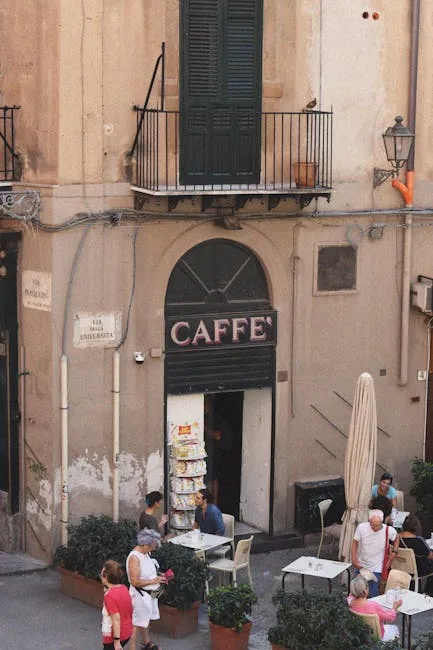
The Piazzetta is often called the « world’s living room »: a small square lined with cafés and terraces where fashion, local life and conversations spill out from early morning. Photogenic year-round, the Piazzetta is perfect for capturing local bustle — waiters in aprons, parked scooters, umbrella-toting tourists and elegant Italians sipping espresso. Golden morning light produces long shadows and flattering tones on the ochres and sun-bleached façades.
Technical tips: for an atmospheric shot, use a mid-range focal length (35–50 mm) to include the square and terraces. A wide-angle lens lets you capture the whole space and the converging alleyways. For environmental portraits, isolate a subject against a façade with shallow depth of field (f/2.8–f/4).
Practical tips: the square is very busy between 10:00 and 17:00; arrive early (07:30–08:30) for quieter images. If you want to photograph cafés with models, always ask — staff are used to photographers. For a wider view with the sea in the background, head up Via Camerelle, just a short walk from the Piazzetta.
2. The Gardens of Augustus (Giardini di Augusto) — Panoramas of the Faraglioni
Address: Giardini di Augusto, Via Giuseppe Orlandi/Via Matteotti, 80073 Capri NA, Italy
Opening hours: Generally 09:00–19:00 (seasonal hours, check locally)
Price: ≈ €1.50 (tourist rate varies, confirm at the ticket office)
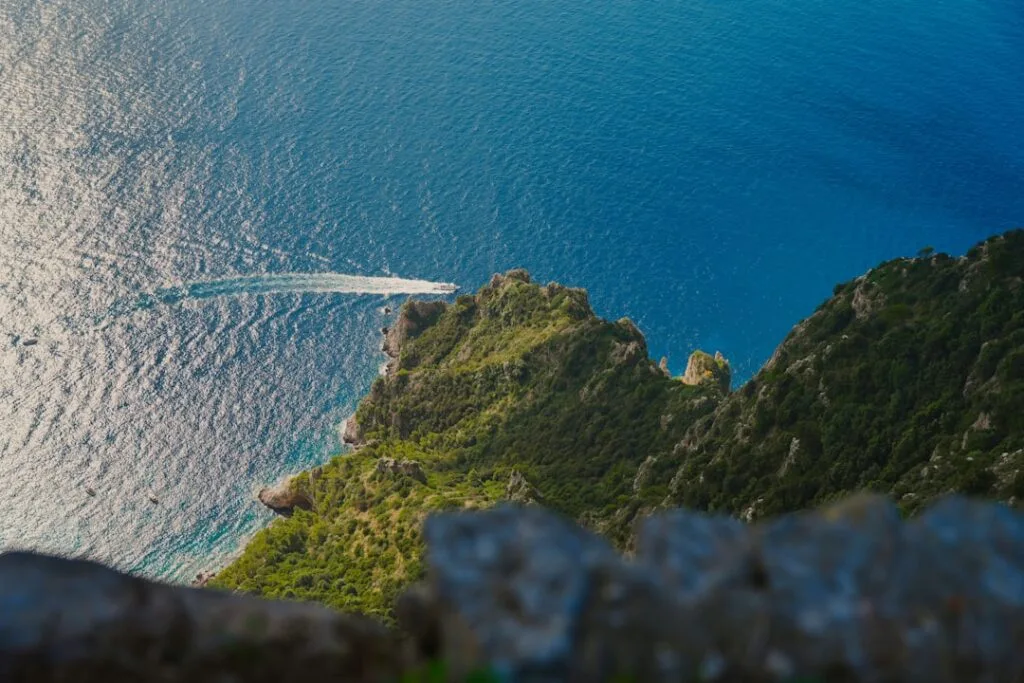
The Gardens of Augustus are a landscaped viewpoint perfect for photographing the famous Faraglioni rocks and the Via Krupp below. The terraces offer structured perspectives — flowerbeds, palms and stair flights — that frame crystal-clear sea views. From the terraces the composition is often simple yet powerful: in the foreground a flowering bed or handrail, and in the distance the Faraglioni cutting a bold silhouette against the blue sea.
Technical tips: favor a telephoto (70–200 mm) to isolate the Faraglioni and compress perspective, or a wide-angle (16–35 mm) to include the walkway and garden foreground. At sunset bracket exposures to handle the dynamic range or use a graduated ND filter.
Practical tips: entry is ticketed and the gardens may close at dusk. Visit in the late afternoon for warm light. If you want a viewpoint with fewer people, take the path along Via Krupp toward Punta Tragara (pedestrian access). Respect signage: don’t cross barriers — cliff-edge risks are real.
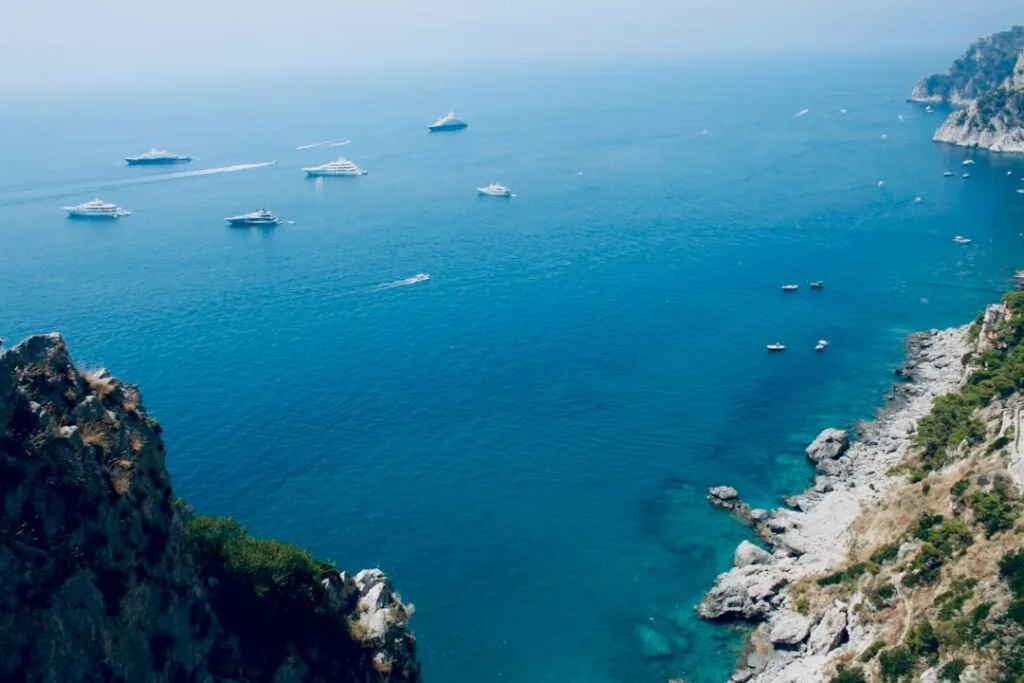
3. Via Krupp — The winding, graphic promenade
Address: Via Krupp, 80073 Capri NA, Italy (access from Giardini di Augusto)
Opening hours: The path is sometimes closed for safety reasons (check before descending)
Price: Free (access may be restricted depending on conditions)
Via Krupp is a dramatic cliffside walkway: a ribbon of tight curves cut into the rock, descending toward the sea and offering a very photogenic geometric aesthetic. Built in the early 20th century, it links the Piazzetta area with the lower coast. From above, the repeating loops form a spiral motif beautifully framed by Mediterranean vegetation.
Technical tips: use a wide-angle to capture the full curve; if you’re higher up, a 50–85 mm lens helps isolate details and play with the repetition of turns. Side light in the morning or late afternoon emphasizes texture. For minimalist images, compose a long scene with few people and a deep depth of field (f/8–f/11).
Practical tips: Via Krupp may be closed after heavy rain or for rockfall risk. Check the status at the Gardens of Augustus ticket office or with local tourist information. Professional shoots with heavy equipment may require permits. To avoid crowds, visit very early in the morning.
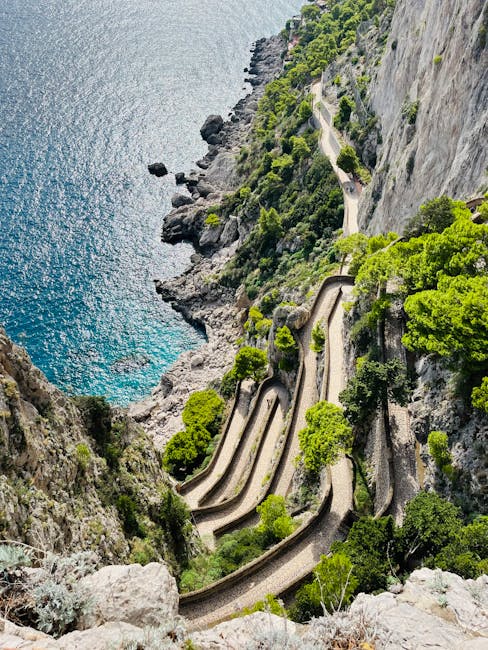
4. The Faraglioni — The three iconic sea stacks
Location: Off the southeast coast of Capri; best viewpoints: Punta Tragara, Marina Piccola, from a boat
Access: View from shore or take a boat trip from Marina Grande (Via Marina Grande, 80073 Capri NA)
Price: Boat tour: ≈ €18–30 per person (30–60 minutes depending on provider); shore viewing: free
The Faraglioni are arguably Capri’s most famous postcard image: three limestone monoliths rising from the sea. Each has its own name and character — they’re often photographed at sunrise or sunset when light sculpts their volumes. Perspectives from Punta Tragara or Marina Piccola let you include foreground rocks, vegetation or colorful boats. For a more immersive angle, take a boat ride that passes between the stacks and allows you to capture the cave carved into one of them.
Technical tips: a telephoto (100–300 mm) is ideal to isolate the rock pillars and capture texture details. Use a tripod for long exposures with an ND filter to smooth the water and create graphic compositions. If you’re photographing the passage between stacks from a moving boat, opt for a fast shutter speed (1/500s or faster).
Practical tips: boat trips depend on wind and sea conditions; in summer book early from Naples or Marina Grande. Be mindful of currents and follow the boatmen’s instructions. Due to crowds, aim for off-peak times (early morning or late afternoon) for calmer shots.
Click here to book a boat trip in Capri with lunch
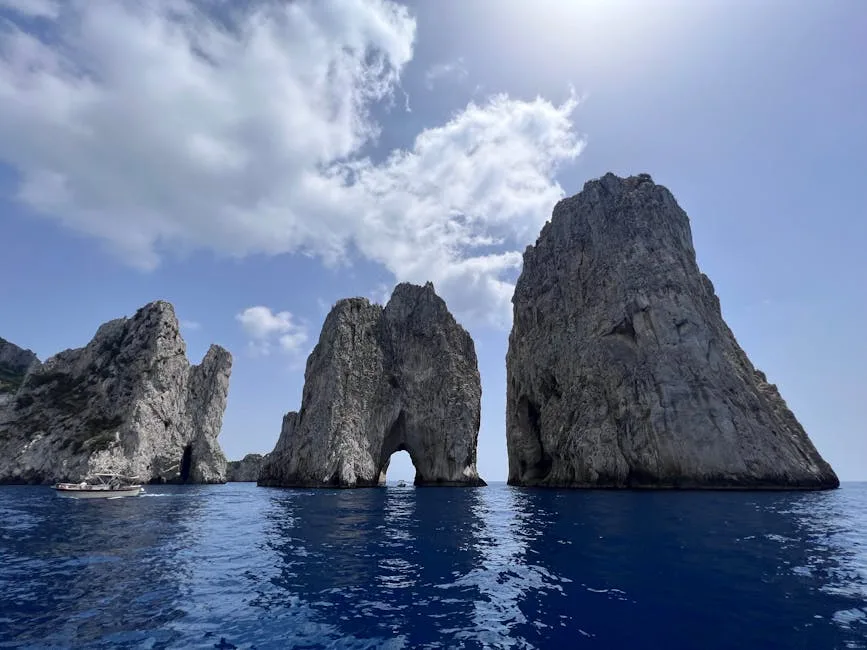
5. Punta Tragara — Viewpoint and legendary hotel
Address: Via Tragara, 80073 Capri NA, Italy (esplanade facing the Faraglioni, near Via Camerelle)
Opening hours: Public access; private hotel areas follow their own rules
Price: Free for the viewpoint; cafes and hotels at their own rates
Punta Tragara offers a spectacular panorama of the Faraglioni and the Tyrrhenian Sea. Once the grounds of a luxury hotel (Belvedere) and now accessible as a promontory, it’s a great spot for backlit compositions and dramatic silhouettes. The terraces along the headland — whitewashed walls, potted plants and benches — provide leading lines toward the offshore rocks.
Technical tips: for silhouettes, expose for the sky to darken the foreground. For panoramas, shoot multiple RAW frames for HDR stitching if the dynamic range is high. For environmental portraits, a long lens (85–135 mm) compresses the scene and places the sea as a backdrop.
Practical tips: reach the area on foot from the Piazzetta via Via Camerelle and the Gardens of Augustus. If you plan to fly a drone, check local rules (overflights are often restricted). In summer protect your gear from heat and salt; a microfiber cloth is handy to wipe lenses after a session.
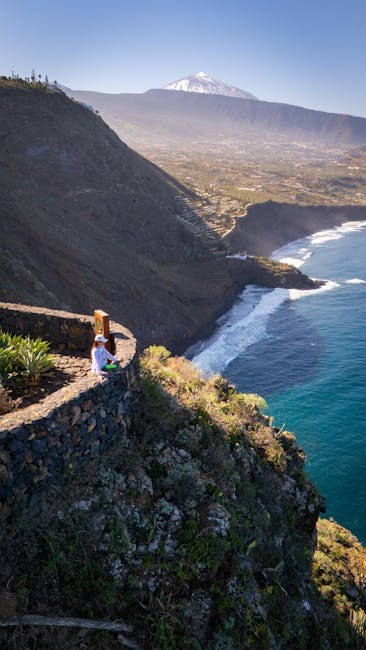
6. Marina Grande — Port life, fishermen and colorful boats
Address: Marina Grande, Via Marina Grande, 80073 Capri NA, Italy
Opening hours: Port buzzing all day; commercial activity roughly 08:00–20:00
Price: Free to shoot outdoors; boat excursions from ≈ €18–30
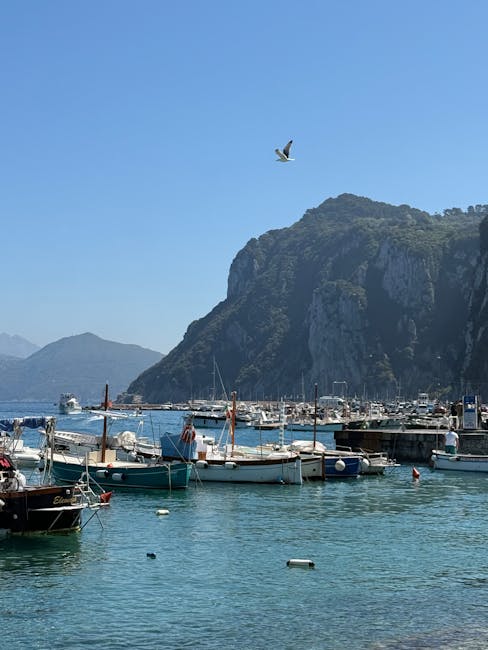
Marina Grande is the gateway from Naples and a lively microcosm: fishermen at work, brightly painted boats, ferry landings and seafront cafés. It’s ideal for capturing authentic island life — nets, ropes, skiffs and conversations. In the background, Capri’s houses rise like an amphitheater up the hill, creating a pleasing contrast between the bustling port and the quieter heights.
Technical tips: for details, a short-to-mid range zoom (24–70 mm) lets you work quickly and capture candid moments. Morning reflections on the water are a bonus: use low-angle light to multiply effects. Black-and-white photos highlight textures (wood, ropes, salt stains) effectively.
Practical tips: anticipate crowds — the port is often the first and last impression for visitors. Best times for calm shots are sunrise (before boats arrive) and late afternoon after excursions depart. Quays may have restrictions: avoid areas marked « private » or « no entry. »
7. Villa Jovis — Imperial ruins and sweeping sea views
Address: Villa Jovis, Via Tiberio, 2, 80073 Capri NA, Italy
Opening hours: Generally 09:00–19:00 (hours vary by season)
Price: Entry ≈ €4–6 (rates vary with local management)
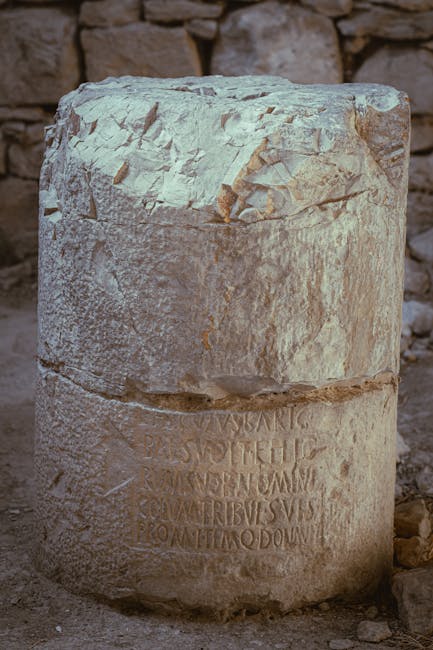
Villa Jovis is Emperor Tiberius’ Roman residence, perched on a rocky promontory on the island’s eastern edge. The sprawling ruins combine ancient architecture with sea panoramas: columns, foundations, stone stairways and viewpoints over the endless sea. The place feels steeped in history and offers a compelling contrast between the mineral textures of the site and the changing light over the water.
Technical tips: to emphasize stone texture, shoot with side light and use lenses in the 24–70 mm range. Wide HDR frames help preserve sky detail while exposing the ruins. For historical portraits, pose the subject in front of an arch or column to create a visual link to antiquity.
Practical tips: access requires a short hike on rocky trails — wear sturdy shoes and bring water. In high season local guides offer themed tours and can point out lesser-known angles. Respect closed areas: some excavations are fragile.
8. Monte Solaro (Anacapri) — The panoramic summit
Address: Seggiovia Monte Solaro departure: Piazza Vittoria, 10, 80071 Anacapri NA, Italy (or hike up from Anacapri)
Opening hours: Chairlift typically 09:00–17:30 (seasonal hours)
Price: ≈ €12 round-trip per person (approximate)
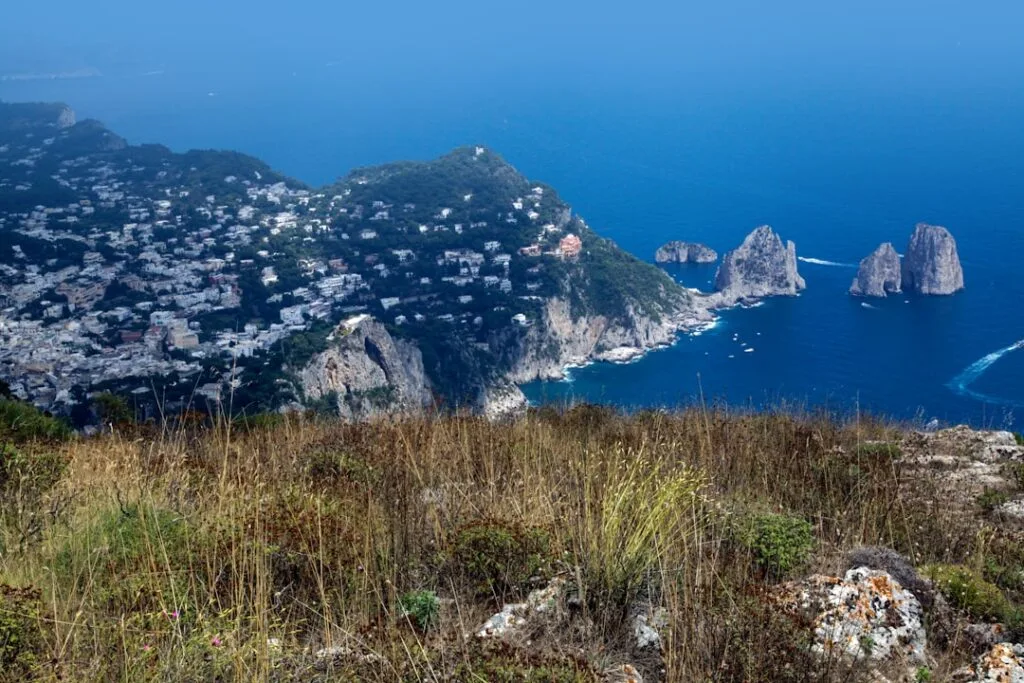
Monte Solaro is Capri’s highest point, above Anacapri, offering 360° views over the island, the Bay of Naples, Vesuvius and the Amalfi Coast on clear days. You can hike up for the fit or take the chairlift (seggiovia) to reach the summit quickly. The panoramic vista is ideal for wide landscape shots, and morning light crisply defines the silhouettes of neighboring islands.
Technical tips: at altitude a wide-angle (16–35 mm) is recommended for panoramas; for distance compression use 70–200 mm. Bring a polarizing filter to deepen blues and cut water reflections. Morning haze adds a mystical vibe — be ready to shoot early.
Practical tips: the summit is exposed to wind and sun: pack a windbreaker and a hat. Facilities up top can be basic; carry water and snacks. If you plan to stay for sunrise, check the last chairlift times for descent. The viewpoint is popular — use creative compositions (rock foregrounds, natural frames) to stand out from typical shots.
9. Villa San Michele (Anacapri) — Tended gardens and refined views
Address: Villa San Michele, Via Capodimonte, 1, 80071 Anacapri NA, Italy
Opening hours: Often 09:00–19:00 (hours vary by season; check the official site)
Price: ≈ €6–8 adult entry (indicative)
Villa San Michele, built by Swedish physician and writer Axel Munthe, is famed for its manicured gardens and sweeping sea views. Terraces, statuary and terracotta pots make perfect subjects for intimate images paired with distant panoramas. The villa also features interesting architectural elements that lend themselves to « detail + panorama » compositions.
Technical tips: for architectural details use a standard focal length (35–50 mm) and shallow depth of field to isolate motifs. For high-resolution panoramas stitch multiple RAW images. Morning light is soft and ideal for capturing flower and stone colors.
Practical tips: the villa charges admission and is less crowded than the Piazzetta, making it a great spot for extended shoots. It’s easily reached from Anacapri’s main square. Buy tickets early to avoid queues and follow garden rules (don’t pick flowers, don’t enter restricted areas). Restrooms and a small shop are usually available on site.
10. The Blue Grotto (Grotta Azzurra) — The glowing interior
Boarding point: Marina Grande, Via Marina Grande, 80073 Capri NA, Italy
Opening hours: Often open 09:00–17:00 (strongly dependent on sea and weather conditions)
Price: Boat entry ≈ €14–20 plus variable site access fees (indicative)
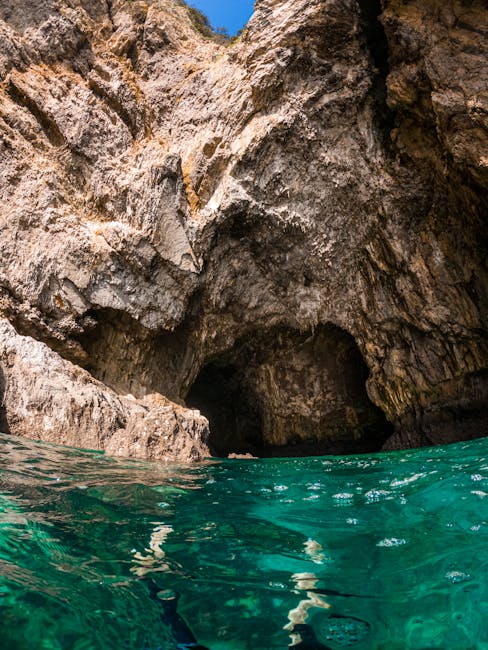
The Blue Grotto is a sea cave famous for its supernatural blue light: sunlight enters through an underwater opening and the sea reflects a luminous azure that floods the cavern. Photographing the interior is a unique experience: the atmosphere is almost unreal, with colored reflections on the walls and silhouetted visitors.
Technical tips: the grotto is dim — use high ISO (800–3200 depending on your camera) and fast, bright lenses (f/1.8–f/2.8). Image stabilization and burst mode help compensate for boat movement. Compact cameras with a night mode can sometimes perform well; avoid direct flash which ruins the natural mood. Silhouette compositions against the blue background work especially well.
Practical tips: access depends on sea state — in rough water the entrance may be closed. Boats are small and often shared; wait your turn and follow the boatman’s instructions. Book an early-morning slot to avoid crowds and walk along the coast for complementary exterior shots. Check the grotto’s open status at Marina Grande before departing from Naples.
Click here to book a day trip to Capri, Anacapri and the Blue Grotto
Conclusion — Planning your photo outing from Naples
Capri is an open-air museum for photographers, and each of the ten stops in this guide offers a different image type: from the urban energy of the Piazzetta to the natural drama of the Faraglioni, through the history of Villa Jovis and the underwater magic of the Blue Grotto. To make the most of a day trip from Naples, plan an early departure from the ports (Molo Beverello or Calata Porta di Massa) to catch the best light and avoid peak summer crowds. Bring a selection of lenses: a wide-angle for panoramas (16–35 mm), a standard zoom for versatility (24–70 mm) and a telephoto to isolate distant subjects (70–200 mm). A lightweight tripod is handy for sunsets and long exposures, but note that some places like the Blue Grotto or the Piazzetta require mobility and quick setups.
Weather and sea conditions strongly influence your itinerary: the Blue Grotto can be closed in rough seas, and Via Krupp may be off-limits for safety reasons. Always check opening times and local conditions on the morning you leave. Think practical: suitable shoes for trails, sun protection, water and spare batteries for your gear. Respect local rules — signs, private areas and boatmen’s instructions — to protect the sites and your safety. And don’t forget curiosity: some of the most surprising frames are small details in alleyways, tucked staircases or a stone bench offering the perfect counterpoint to wide panoramas.
If you’re planning your visit from Naples, pair ferry rides with guided tours if you want historical context, or explore independently to move at your own pace. Capri is photogenic at any hour: calm mornings, bright afternoons and golden evenings each have their own palette and mood. Whether you come back with a stack of postcard shots or with unique, personal images, the island will remain an endless source of inspiration. Safe travels and happy shooting!