





Introduction
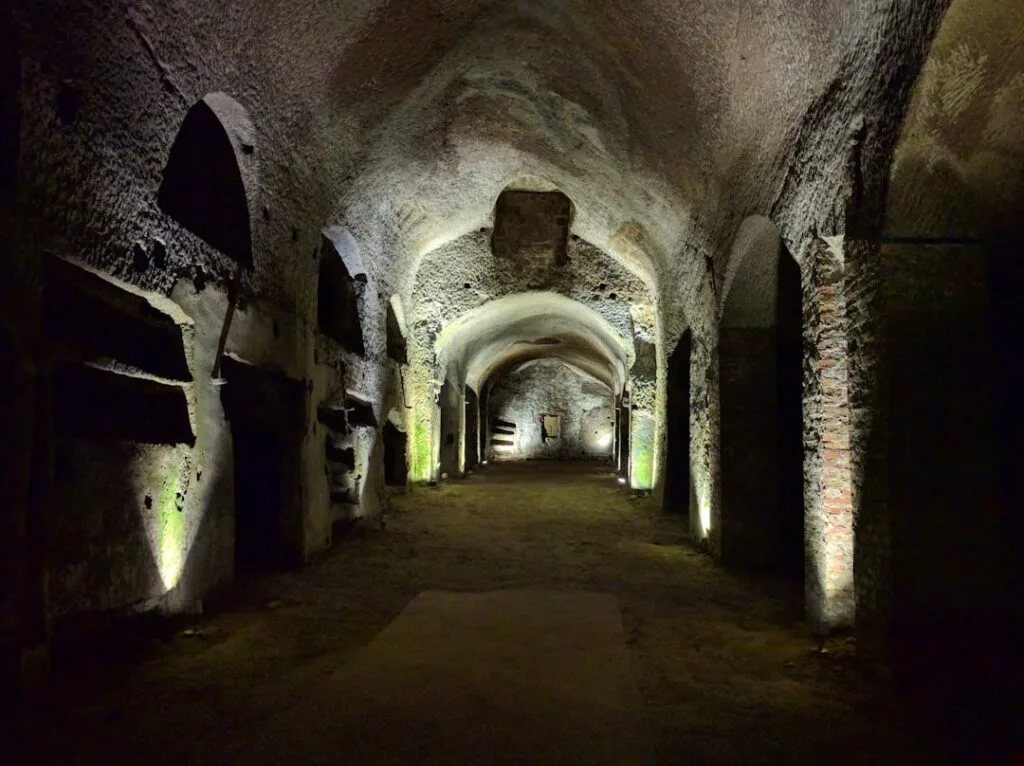
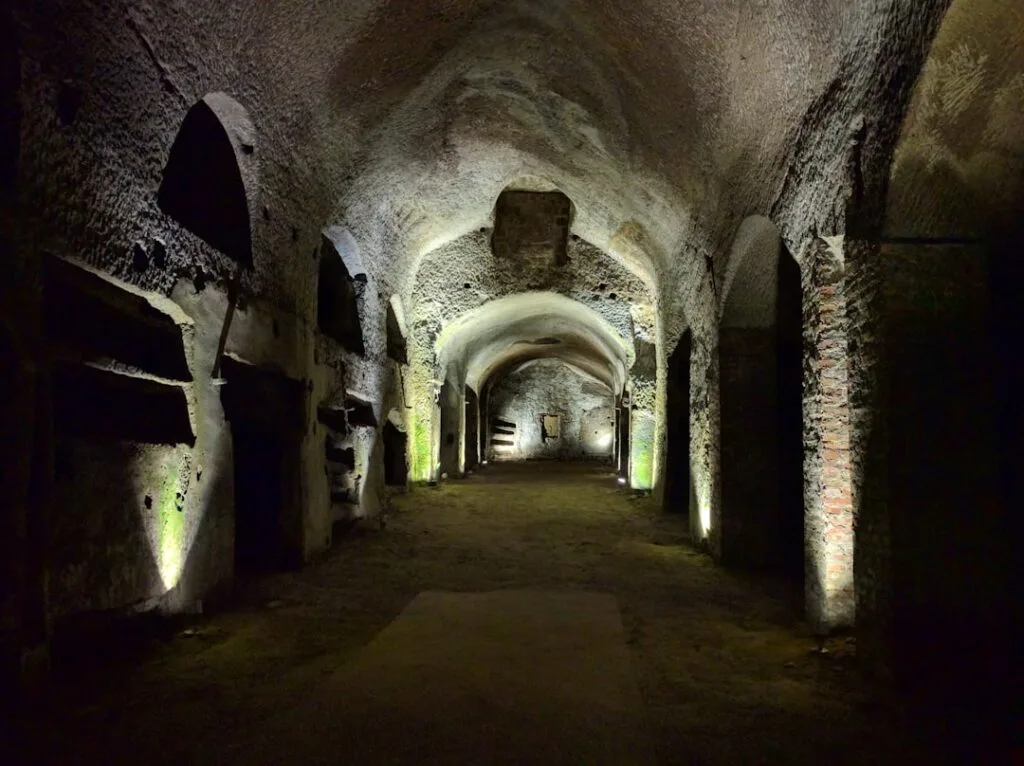
The Catacombs of San Gennaro are among the best-preserved Christian burial complexes in Naples, bearing witness to a religious, artistic and social history that stretches back to Late Antiquity. Located in the Rione Sanità neighborhood, these catacombs take you on an underground journey through layers of time: pagan burial grounds transformed into Christian necropolises, rock-cut chapels richly decorated, ancient frescoes and sarcophagi that reveal the daily life and devotion of Neapolis’s earliest Christian communities. The atmosphere is at once solemn and intimate, with shadow and filtered light creating a setting perfect for contemplation and historical discovery.
A visit to the Catacombs of San Gennaro is more than wandering subterranean corridors; it’s part of an urban itinerary linking several key neighborhood landmarks: the Basilica di Santa Maria della Sanità, the Cimitero delle Fontanelle, and the broad green expanse of Parco di Capodimonte. Approaching the site from Via Capodimonte or Piazza Sanità prepares you to enter a world where funerary art meets popular faith and archaeological layers reveal diverse commemorative practices. Mosaics and wall paintings, sometimes fragmentary, depict biblical cycles and martyrdom scenes, while the underground architecture showcases impressive excavation and construction techniques for the period.
For today’s traveler, the visit also offers immersion in contemporary Naples: encounters with passionate local guides, the feel of the subterranean climate, and a deeper understanding of Neapolitan traditions like the cult of San Gennaro, the city’s patron saint. The catacombs are a living site too: they are actively studied by archaeologists and occasionally host cultural events. Before you descend, it’s useful to have practical information at hand — opening times, prices, dress tips — so you can enjoy the experience without unwelcome surprises.
 Click here to book your ticket and guided tour of the Catacombs of San Gennaro
History of the San Gennaro Catacombs: Origins and Development
The Catacombs of San Gennaro, officially known as the Catacombe di San Gennaro, were established between the 3rd and 5th centuries AD. Their development took place in a context where a nearby pagan necropolis was gradually appropriated and converted by emerging Christian communities. These underground spaces initially functioned as collective burial sites before evolving into true cult complexes, with loculi, arcosolia and dedicated chapels. The site’s central figure is, of course, San Gennaro (Saint Januarius), a 4th-century bishop of Naples who was martyred; devotion to him turned the catacombs into a pilgrimage site and a focal point of collective memory.
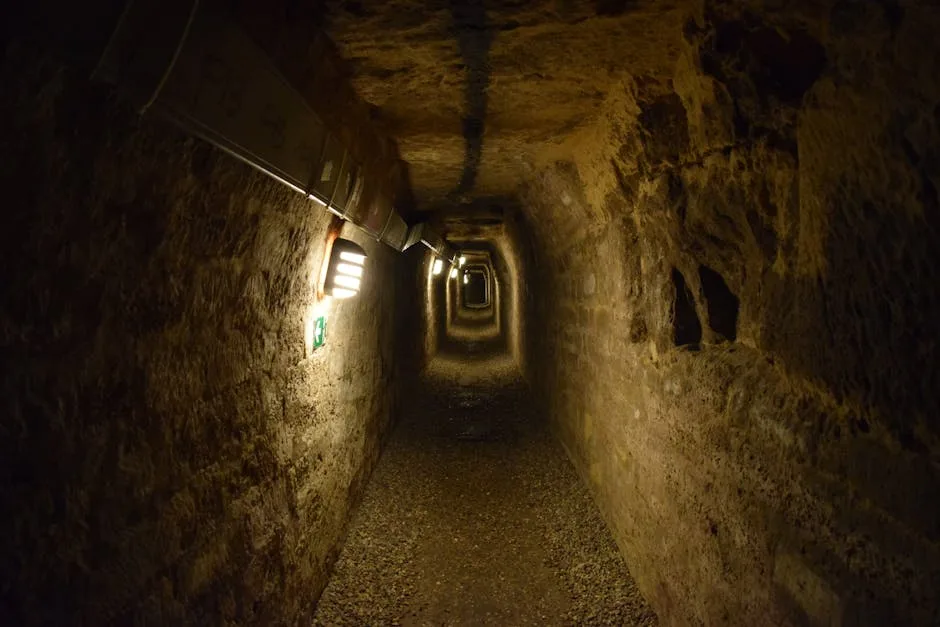
Archaeological work since the 19th century has helped reconstruct the funerary network’s layout: main galleries, small burial niches, private burial chambers sometimes adorned with plaster and paintings. The site’s stratigraphy shows how different phases of use followed one another — from early Christian tombs to medieval adaptations — each adding elements that tell the religious history of Naples. Some sarcophagi and reliefs bear inscriptions in Greek and Latin, demonstrating the cultural and linguistic importance of the port city.
Over the centuries the catacombs have been altered by urban development, earthquakes and flooding, requiring successive restorations. Today they are managed jointly by the Soprintendenza Archeologia, Belle Arti e Paesaggio per la città metropolitana di Napoli and local associations that oversee conservation and promotion. Modern visitors can therefore admire a site that, while fragmentary, retains strong emotional and historical impact, enriched by recent archaeological discoveries and on-site interpretive panels.
Practical Visitor Info: Address, Opening Hours, Prices and Access
To plan your visit, here are the essential practical details accurate at the time of writing. The Catacombe di San Gennaro are located at: Via Capodimonte, 13, 80136 Napoli NA, Italy. The main entrance point is near Piazza Sanità, which makes it easy to combine the visit with other Rione Sanità sites.
Opening hours (indicative and subject to change depending on season and events):
- Tuesday to Sunday: 09:00 – 17:30 (last entry at 16:30)
- Monday: closed
- Exceptional closures: national public holidays and special events — check the official site before you travel
Admission prices (approximate and commonly applied):
- General admission: €12.00
- Reduced fare (students, seniors): €8.00
- Children (6–12 years): €5.00
- Children under 6: free
- Guided tour in English: €15.00–€18.00 (per person, depending on operator)
Getting there and transport options:
- From Napoli Centrale Station (Piazza Garibaldi): take Metro Line 1 to Materdei or Municipio, then a local bus (CTP lines) or taxi (15–25 minutes depending on traffic).
- From the Port of Naples: direct taxi (15–20 minutes) or metro + bus if you want to combine the visit with the historic center.
- Parking: there are some public parking options around Via Capodimonte, but parking within Rione Sanità can be limited; public transport or a taxi are recommended.
Booking tips:
- Book online when possible, especially in high season (April–October) and on weekends.
- Prefer guided tours to fully understand the iconography of the frescoes and the purpose of the different spaces.
- Check whether ID is required for reduced fares.
Click here to book your ticket for the Naples Underground tour
On-site Discoveries: What to See and Feel
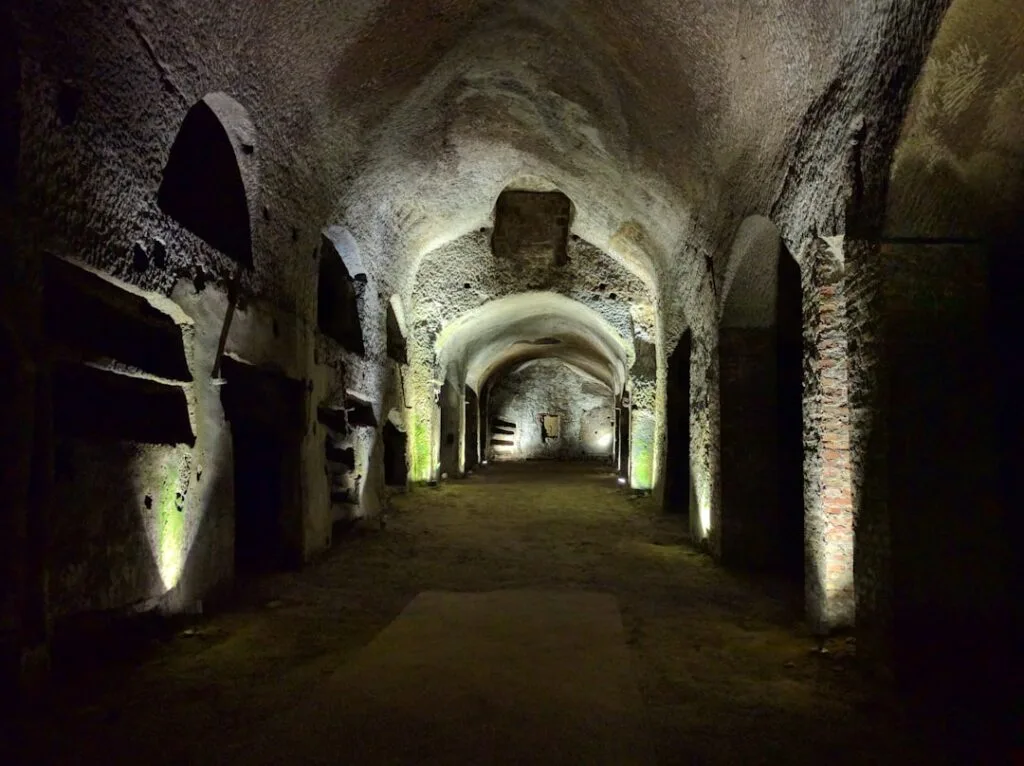
Once you descend into the depths of the Catacombs of San Gennaro, several points of interest stand out. Must-sees include the Crypt of San Gaudioso (when accessible during certain exhibitions), arcosolia decorated with early Christian paintings, and the decorated sarcophagi that reflect changes in funerary design. The wall paintings, sometimes very well preserved, depict biblical scenes, portraits of saints and Christian symbols (fish, the Good Shepherd) typical of the first Christian communities.
The main Burial Chamber, with its niches and inscriptions, provides insight into funerary rites and commemorative practices: the use of votive lamps, offerings, and engraved epitaphs. Stylistic differences across areas of the site reveal successive occupations: some rooms show medieval reworkings, others retain a stronger early-Christian character. The floors of certain galleries preserve pits and traces of installations that tell how families accessed and maintained tombs.
Beyond the artistic and historical features, the visit is a sensory experience: steady coolness, the echo of footsteps, and directed lighting that brings ancient pigments to life. Bring a headlamp if your tour includes less-lit sections (though most tourist routes are signposted and lit). Professional guides often share local anecdotes — the link between San Gennaro and Naples’ dramatic events, or legends tied to miracles attributed to the saint — which enrich the viewing of the artworks.
Practical Tips and Local Recommendations
To get the most out of your visit to the Catacombe di San Gennaro, a few locally informed and practical tips are invaluable. First, dress appropriately: even in summer the underground temperature remains cool (around 16–18°C), so bring a light sweater and wear closed, non-slip shoes because floors can be wet and uneven.
Next, favor guided tours (in Italian or other languages): they typically last between 60 and 90 minutes and let you go beyond the basic information on plaques. Official guides are often trained in art history and archaeology, and can explain symbol meanings, fresco iconography and the social context of burials.
Other practical tips:
- Carry cash for small purchases; some local tourist offices accept cards, but not all small kiosks do.
- Arrive 20–30 minutes before your scheduled tour to collect tickets and avoid queues.
- Respect site rules: no tripods, no food or drink within the circuit, and photography is allowed without flash (to protect pigments).
- Combine the catacombs with a visit to the Basilica di Santa Maria della Sanità (Piazza Sanità, 80136 Napoli) and the Cimitero delle Fontanelle (Via Fontanelle, 80, 80137 Napoli), two sites that complete an understanding of Neapolitan death cults.
- If you’re traveling with family, check the route length and accessibility: the catacombs are not fully stroller- or wheelchair-friendly.
Conclusion
The Catacombs of San Gennaro are far more than an archaeological site: they are a place of emotion, history and memory at the heart of Naples. Descending into these galleries means crossing a temporal threshold where the devotion of early Christians, the popular fervor surrounding San Gennaro, and traces of a city that blended rites and funerary art are all readable. The exact address — Via Capodimonte, 13, 80136 Napoli NA, Italy — makes planning straightforward, and the indicative hours and prices (general admission ≈ €12.00, guided tours ≈ €15.00–€18.00) help you organize a calm visit.
For the curious traveler, the visit offers multiple layers of engagement: close study of frescoes and sarcophagi for art and archaeology lovers; insight into funerary practices for budding historians; and a sensory experience for anyone wanting to feel Naples from below. By following a few practical tips — booking ahead, dressing appropriately, respecting site rules — you’ll ensure a rich and respectful visit. And don’t forget to explore the Rione Sanità neighborhood before or after your trip underground: its streets, markets and churches offer a lively continuation of the historical plunge you’ve just made.
In short, whether you’re a history enthusiast, a photographer chasing unique atmospheres, or a traveler seeking authenticity, the Catacombe di San Gennaro are an unmissable stop in Naples. Their blend of artistic beauty, historical depth and local life turns a visit into a memorable experience, rooted in the city’s heart and the memories of its people.